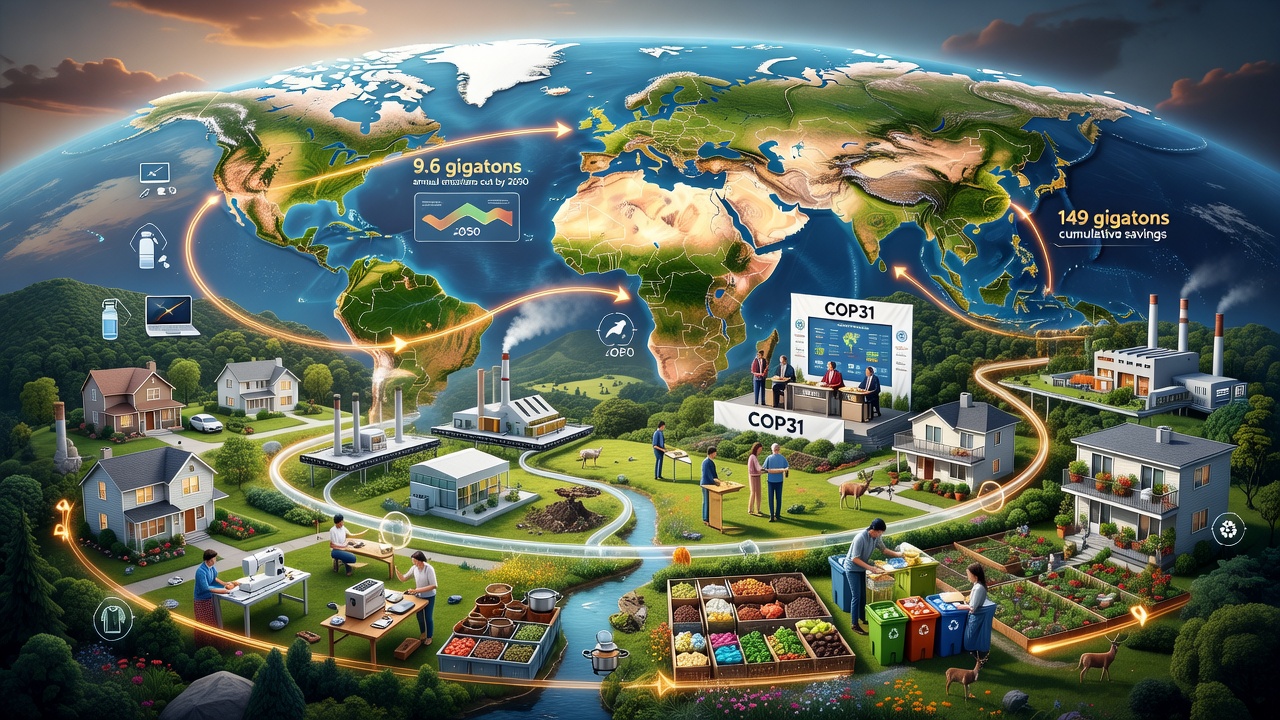
A report presented at COP31 argues that zero-waste and circular economy practices could avoid a large volume of greenhouse gas emissions. According to the findings, annual savings could reach 9.6 gigatons by 2050, adding up to a cumulative figure of 149 gigatons over the period. The analysis points to reducing waste as a climate measure that sits alongside energy and transport policy.
What the report measures
The report focuses on circular economy measures, which aim to keep materials in use for longer through reuse, repair, recycling and reduced production. Its central claim is that these approaches can prevent emissions that would otherwise come from extracting raw materials and manufacturing new goods. The cumulative total of 149 gigatons is the figure that accumulates across the years to 2050, while 9.6 gigatons is the annual savings expected by mid-century.
How household choices fit in
Much of the activity the report describes happens at the level of products and supply chains, but everyday habits shape demand for those systems. Buying durable goods, repairing appliances and reducing food waste all reduce the material throughput that drives emissions. For US households, the practical takeaway is that waste reduction is a measurable way to lower environmental impact without a single large change.
Limits of the findings
Projections of this kind depend on assumptions about how quickly policies, businesses and consumers adopt circular practices. The supplied context does not detail the methodology behind the estimates, so the figures should be read as forecasts rather than measured results. The report's scope also means it does not quantify every emissions source, and savings will vary by sector and country.